
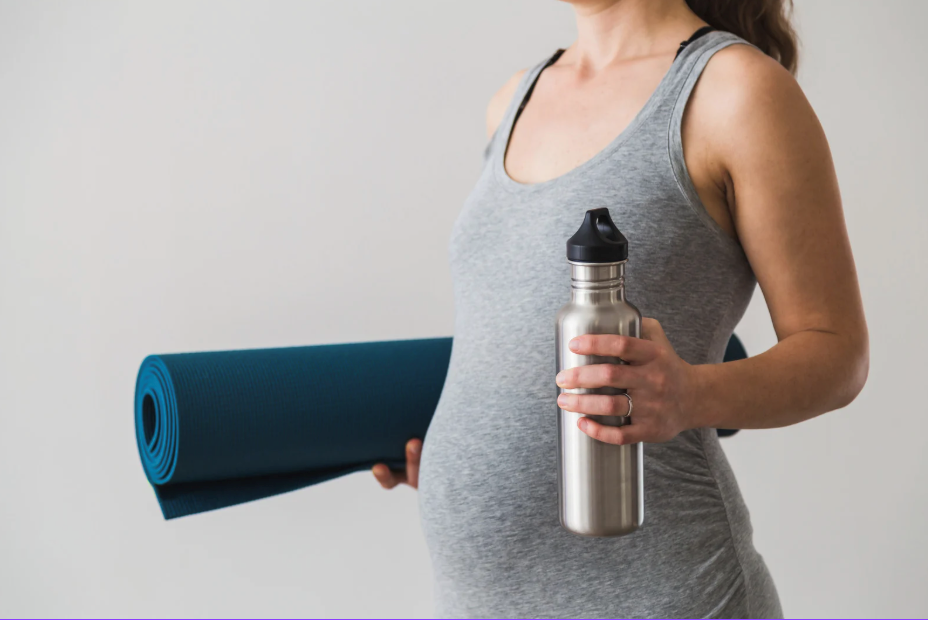
The belief that women should quickly “snap back” into their pre-pregnancy shape after childbirth places immense, and unrealistic, pressure on new mothers. This expectation not only misrepresents the complex, gradual nature of postpartum recovery, but also dismisses the significant physiological and psychological transformations that occur during and after pregnancy.
Every postpartum journey is unique. For many, recovery takes months, or even longer. And that’s not a failure; it’s normal.
During this time, our identity is often in flux. As women, we are called to make major decisions about our careers, relationships, and who we are as parents, all while our bodies undergo one of the most dramatic shifts of our lives. Hormones fluctuate, physical systems adjust, and our energy is pulled in every direction. Amidst sleepless nights and emotional highs and lows, our own recovery needs can easily fall to the bottom of the list.
But postpartum health matters. And part of reclaiming that space is letting go of the myth that we must return to “how things were” as quickly as possible, especially when it comes to our bodies.
So, we asked our mums…
- What was your biggest body challenge after birth?
- How did you begin to reengage with movement?
- What barriers did you face when it came to staying active—and how did you overcome them?
Read their real, unfiltered stories below, capturing the layered complexity of returning to movement after childbirth:
Natasha, age 36 (children aged 3 years and 1years): My return to movement was turbulent, I went from 0 to 100 returning to competitive sport 8 weeks post caesarean. My mobility was great, however I had to catch up my strength often experiencing significant pelvis pain after moderate and intense exercise. Movement and playing sports is the fabric that makes me who I am. The sheer volume of sitting, particularly in the early days, was my biggest body challenge. You sit to breast feed, to sit to settle the baby (most of the time), and simply because you’re exhausted! I was itching to move and get back into my usual activities, however attempts were often interrupted by needs that weren’t my own, or by my post pregnancy physical limitations. I’m not sure I overcame all the challenges, as there were months of little to no structured exercise, but I knew I’d eventually find my rhythm and achieve exercise consistency and feel like myself again, even with this new body.
Kristina, age 33, (Mum of a 2 year old): I gave myself 4-5 weeks to rest after giving birth, looking online for recommended timeframes for rest. Going for a walk was my first postpartum exercise and it was great, but I also felt apprehensive about what to expect. I didn’t know if the simple route I’d walked countless times before would be too much now. I could feel my body was different, but didn’t quite understand the how, why or timing for my body to return to some semblance of normality. It was a case of ‘one step at a time’ and gauge how my body responded. I was okay with that walk and that helped me understand my starting point.
I really started to reengage with physical activity through team sports and the social interaction it provided. Having a baby is quite isolating, even when you’re surrounded by so much support, because you’re physically unable to revert back to your pre-baby body overnight even though mentally you’re like ‘okay I’m ready to be me again’ and get to it. I started back into team sports at around three months postpartum but just for fun and not competition, but only for a few minutes at a time. I quickly realised my flexibility and reflexes had diminished, and I could genuinely feel the muscles on my tummy not work the way they used to, so I was apprehensive about pushing it too hard too soon.
I quickly realised I wasn’t ready to play even a period of the game, let alone the whole game. Instead, I got back around the team, enjoyed their company and support, and jumped on when I could, slowly building up strength and confidence in my new body through training and games.
The biggest barrier I had to overcome was mental: giving myself permission to be away from my baby so that I could exercise. As a new mum, I thought that if I wasn’t with my baby, I was somehow failing – which wasn’t true at all – but I had to give myself permission and learn to manage those feelings of guilt which was hard. I had some important conversations with my partner who fully supported me exercising again and helped me make time for me. Once I started those first few sessions of exercise again, and realised I could have some time for myself, I started to feel better. Having a supportive partner and friends helped me return to exercise more than I could’ve managed alone.
I’m not back to where I was pre-pregnancy and most of the time, that’s okay. Some days it’s a struggle and that’s okay too. The biggest thing I could do to help myself was to stop expecting to go back to my former self. Even without having a baby, we go through changes without expecting to return to our former selves, and realising I didn’t have to go back to who I was physically after having a baby was just as important to realise, if not more.
Amanda, age 37 (children aged 5 years, 3 years, and 8 months): I knew after baby number three I wanted – and needed – to prioritise my physical health. From my previous postpartum experiences I had learnt what didn’t work for me – early mornings, gym classes and rigid programs were all just not feasible with busy family life and a baby that didn’t follow a schedule.
This time around I tried out a few online subscriptions to find one that worked for us. I love that I can take a 5 min or 1 hour class whenever it suits me, and in the comfort of my home. I feel strong and capable. My body has changed, and I am proud of what it has done, and continues to do.
For me, my biggest body challenge was understanding just how much my body had changed, what my new limitations would look like and giving myself permission to exercise.
Sarah, age 38, (children aged 4 years and 9 months): Motherhood is beautiful – but it’s also challenging in ways many of us don’t expect. After having my two children, I was surprised by just how physically demanding breastfeeding was on my body. I began to experience stiffness and soreness in my neck and shoulders in the early days with the constant, around-the-clock feeds, and as my babies grew bigger and became heavier, the strain on my body only increased. What started as occasional discomfort became a daily issue, and it began to affect how I moved, how I held my children, and even how I felt in myself.
I realised I needed to be more intentional about how and where I breastfed. I started by reassessing my setup and made sure my chair supported me properly. I added extra pillows to support my arms so my neck and shoulders no longer had to bear the full weight of my baby, whilst allowing my shoulders to relax. These small postural adjustments made a big difference. I also started with 5 minutes of regular stretching and light weights each day to rebuild strength and restore movement. I gradually increased this over time as I felt able. These seemingly simple changes helped transform breastfeeding from something that was draining me physically and mentally into a more comfortable and sustainable experience. It wasn’t an overnight fix, but with consistency and patience, I started to feel like myself again—stronger, more balanced, and more aware of my body’s needs.
Caitlin, age 36 (children aged 4 years and 2 years). In my first pregnancy, I had severe pelvic girdle pain, which made it difficult to maintain much strength and fitness in my lower body, specifically my hips and legs. After my second pregnancy and birth via emergency c-section, I found my biggest challenge was pain in my right shoulder and neck. The pain was exacerbated by breastfeeding and holding or rocking my baby.
Recovering from emergency c-sections under general aesthetic both times meant I had significant pain and my wound to manage immediately after. Post birth I was given some advice by a Physiotherapist in the (public) hospital, however I found this quite generic and not necessarily focussed on my personal issues, rather a practised version of the do’s and don’ts of recovering from a c-section. After each birth, I reengage with activity through gentle walking when each of my babies were a few weeks old. At 6 weeks post-partum, I saw a women’s health physiotherapist and my GP to be cleared for return to other forms of exercise. I returned to reformer Pilates sessions a couple of times a week (Mums and Bubs classes) and continued with walking and small amounts of strengthening exercises at home. I also joined a 6 week Mums and Bubs group gym class to try something different.
The biggest barrier for exercise was often the cost and motivation for self directed exercise. The Pilates classes became quite expensive over time (particularly whilst not earning an income), and I struggled to keep myself motivated to do strength based exercise on my own.
I relied a lot on Pram walks and weekends to be able to work on my fitness.
A few years on and I am planning to travel to New Zealand to complete a half marathon. My fitness is still not where I’d like it to be however I recognise I’ve come a long way, my health is always a work in progress, and I’m ok moving at my own pace.
Emily, age 37 (children aged 4, 2, and expecting): My biggest body challenge after birth was getting my core strength back. Even lifting the baby felt like my core was non-existent. This also came with the flabby belly that I thought would never shrink back! I started doing the mum’s and bub’s hydrotherapy and Pilates classes as they accommodated having the baby present. This became more difficult after about 5 months as the baby’s more structured naps got in the way. I then found trying to fit in short 10 minute work outs at home more achievable.
My biggest barriers to exercise were not having a good support network, and any exercise had to be done with the baby present. The solution initially was those mums and bubs classes. Sleep was also a big barrier as my first had significant sleep issues. Getting out the house meant that he may have a Power Nap on the go and then I would miss the opportunity to have a short nap myself or just a rest at home.
Postpartum health matters, and your journey is unique. If you are needing help reengaging with activity at any level, at Saluti Exercise our Exercise Physiologists work with you to set a starting point and develop a structured and graduated exercise plan aligned with your goals. We support you at every stage, ensuring safe and effective progress, so you can redefine your joy in life and activity.